Giuseppe Formato
Books

Copies are available for purchase online at Letras Lavadas.
Echoes of Azorean Life –
A Cultural and Linguistic Portrait of the Island of Santa Maria
“Echoes of Azorean Life” offers English-speaking readers an unprecedented introduction to the culture, history, and everyday life of Santa Maria, the first island of the Azores to be settled. More than a lexicon of regional expressions, it is a cultural and linguistic portrait of the island and its people. Drawing on a lifetime of observation, Arsénio Chaves Puim reveals the close relationship between language and culture through distinctive vocabulary, historical reflections, and vivid accounts of architecture, cuisine, religious festivals, emigration, oral traditions, and daily life. As local varieties of Portuguese become increasingly uniform, this volume preserves the speech, customs, and lived experience of an earlier Santa Maria, providing a valuable record of Azorean cultural heritage. Carefully translated and extensively annotated by Giuseppe Formato, this first annotated English edition makes one of the most significant works ever written about Santa Maria accessible to English-speaking readers, particularly descendants of Azorean emigrants, as well as students and scholars of Portuguese language, culture, and history.
Journal Articles
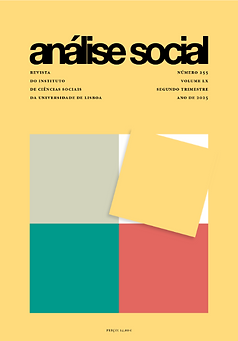
Análise Social
Heritage language as identity: perspectives from the Azorean-American diaspora of New England. This article calls attention to the sociolinguistic invisibility of young heritage language learners of European Portuguese in New England. Through an exploratory analysis, based on ethnographic and sociolinguistic insights, we highlight the mismatch between top-down Portuguese language instruction policies and bottom-up language experiences in the Azorean-American diaspora in Massachusetts, affecting not only the academic success of those students but also their own ethnolinguistic identity. We critically analyze how a powerful standard language ideology, which is both monolinguist and monocultural, impacts language teaching policies, and thereby question the notion of a singular Portuguese heritage language that masks its internal diversity

Journal of Language and
Cultural Education
Instructors of Italian are tasked with teaching not only the language, but also the culture. However, critical matters such as sexual identity are frequently not addressed in the Italian-language classroom. Current Italian-language pedagogy solely focuses on language-acquisition proficiency via heteronormative discourses, ignoring the more-diverse reality of Italian culture. This article aims to showcase how using a queer pedagogy based on queer theory can affect learners’ language acquisition and understanding of Italian culture. I used memoing and personal experiences as an Italian instructor to analyse the related literature. I propose that current pedagogy and curricula silence the lesbian - gay - bisexual - transgender questioning / queer - intersex -asexual (LGBTQIA+) community, causing exclusion, anxiety and sometimes harassment from others. Open discussion through queer pedagogy would create critical conversations, allowing for the inclusion of all learners and topics. Italian instructors should promote these conversations, question the standard Italian-language pedagogy and use materials that are inclusive of LGBTQIA+ members.

Internation Journal of Linguistics
Visual arts are culturally and historically significant to Italy and a reason why many people study the Italian language. This significance is visible in Italian-language classes, from mentions of high art in beginner-level textbooks to entire courses taught in advanced-level Italian devoted to these arts and their respective movements. The importance of these works to art history and to humanity at large cannot be denied relative to learning about Italian culture in the classroom. However, as presented in this literature review, it may be useful to reevaluate how these more traditional teaching subjects can be considered neutral, with a heavy emphasis on instruction as well as a subconscious perpetuation of racist, sexist, and capitalist ideals. By instead drawing upon the contemporary Italian Arte Povera movement a tool of critical pedagogy from beginner to advanced Italian-language courses, Italian art culture and language can be taught by using a more political, multidimensional approach focused on the learners’ contexts and histories. Thus, students may better understand themselves through Italian language and foster critical thinking, in addition to ultimately acquiring the language.

Trabalhos em Linguística Aplicada
This article aims to analyze the entanglements of “Portuguese” in a diasporic context and its recognition as a heritage language. Through a collaborative research at the disciplinary intersection between anthropology, sociolinguistics and education, located in a small territory in Greater Boston and marked by an older Azorean immigration, the analysis is organized on two complementary levels: a local, socio-spatial and community, in an ethnographic narrative, and another one more individual, anchored in a personal-linguistic trajectory, in an autobiographical narrative. The discussion emphasizes the role of the ideological dimension, transversal to the various points analyzed, opening for a critical reflection on Portuguese as a heritage language in the United States.

Theory and Practice in Language Studies
The climate crisis threatens our very existence in a myriad of urgent ways and thus merits imperative focus in pedagogic practices in general. This focus is achievable in Italian-language classrooms, where issues of global warming and climate crises are seldom mentioned, through artistic themes from Italy’s rich cultural heritage of the arts. The radical art movement of Arte Povera has the potential to bring ecological concerns to the forefront through a critical cultural lens of the country. By drawing upon images of the Arte Povera movement, concepts of eco-justice and eco-pedagogy can occur through paradigms of art-based education to not only discuss the impact of the climate crisis in Italy, but also achieve Italian-language acquisition critically.

Journal of Language
Teaching and Research
This article explores theoretical underpinnings for the use of critical pedagogy in the Italian language learning classroom. Its description of various components of critical theory lends a historical context for critical pedagogy, particularly in the arguments of Gramsci and the Frankfurt School, that contrast with positivist tenets. These critical elements extend to the classroom in a Freirian framework, including concepts such as banking, coding, and conscientization. Such lenses apply to the realm of foreign language teaching, particularly aspects of transformative learning. Issues surrounding materials design are also considered. Avenues and opportunities for critical thinking are explored through lesson plan ideas, as well as possible thematic unit topic suggestions in Italian courses. This paper concludes with questions for future research by language scholars in the field of education, in addition to a call to action for educators of Italian

European Journal of
Foreign Language Teaching
Portuguese is a language rich in varieties. Some adult heritage learners of Portuguese acquire it quickly and easily, while others students display negative attitudes towards the instructor’s dialect and withdraw from classes altogether, despite both groups receiving the same linguistic input. The dearth of research on this topic begged the research question, How does linguistic variety affect motivation in adult heritage learners of Portuguese?This study used semistructured interviews with 20 adult heritage learners to provide insight into the question, and aspects of adult learning, the L2 motivational self-system, and L2 acquisition theory as theoretical frameworks. Overlapping themes of identity, ideal selves, and language attitudes related to motivation towards Portuguese varieties, as well as their profound influence on a heritage learner’s motivation and acquisition success, emerged. These results suggest placing greater importance on consideration of linguistic variety in the classroom when assessing adult heritage learners
Book Chapters

One Atlantic, Many Perspectives:
Valuing Diversity in the Age of Competition
This chapter explores the experiences of Azorean immigrants in Inman Square, Cambridge, Massachusetts, focusing on the interplay between individual narratives, historical forces, and the impact of gentrification. It introduces Margarida, a Santa Maria Azorean-American, whose life story exemplifies the profound transformations within her community. The study uses a multidisciplinary approach, weaving together ethnographic insights and archival research from both Cambridge/Somerville and Santa Maria, Azores, to provide a nuanced understanding of Azorean identity formation and its shaping by transnational ties. The research examines the social, economic, and cultural impacts of gentrification on the Azorean community, highlighting their remarkable resilience and adaptation in the face of displacement and cultural erosion. The chapter ultimately demonstrates the complex negotiations between preserving cultural identity and maintaining a sense of place within a rapidly changing urban landscape.

The Everydayness of Cities in Transition: Micro Approaches to Material and Social Dimensions of Change
This chapter explores the experiences of Azorean immigrants in Inman Square, Cambridge, Massachusetts, focusing on the interplay between individual narratives, historical forces, and the impact of gentrification. It introduces Margarida, a Santa Maria Azorean-American, whose life story exemplifies the profound transformations within her community. The study uses a multidisciplinary approach, weaving together ethnographic insights and archival research from both Cambridge/Somerville and Santa Maria, Azores, to provide a nuanced understanding of Azorean identity formation and its shaping by transnational ties. The research examines the social, economic, and cultural impacts of gentrification on the Azorean community, highlighting their remarkable resilience and adaptation in the face of displacement and cultural erosion. The chapter ultimately demonstrates the complex negotiations between preserving cultural identity and maintaining a sense of place within a rapidly changing urban landscape.

EM Migração EM Português:
Exílios, retornos, colonizações
Este capítulo analisa como a escolha da variante do português ensinada em contexto universitário influencia a motivação, as atitudes, a identidade e o desempenho académico de adultos aprendentes de língua de herança na região metropolitana de Boston. Partindo da investigação de doutoramento de Giuseppe Formato (2018), baseada em Análise Fenomenológica Interpretativa (IPA) com 20 estudantes descendentes de famílias portuguesas (incluindo açorianas) e brasileiras, discutem-se cinco eixos centrais: motivação, razões para estudar, interesse na variante, experiências visionárias e performance académica. Os resultados mostram que a proximidade entre a variante usada pelo docente e a herança linguística familiar tende a reduzir o “filtro afetivo” e a fortalecer o investimento do estudante, enquanto a discrepância entre variantes pode gerar desidentificação, desmotivação e dificuldades de aprendizagem. Em diálogo com o trabalho etnográfico e histórico de Graça Índias Cordeiro sobre a construção social e política da categoria Portuguese speaker em Massachusetts, o texto problematiza a tensão entre a ideia de “língua portuguesa” no singular e a pluralidade dos seus usos e significados num contexto urbano hiperdiverso. Defende-se, por fim, a necessidade de abordagens de etnografia linguística capazes de captar a fluidez identitária, a multimodalidade do sentido e o caráter pluricêntrico do português para além de normas binárias (PE/PB).